Open 16.4, its mental

Scaled Workout

13 minute AMRAP

  • 55 Deadlifts @61kg
  • 55 Wall balls, 9kg to 9ft
  • 55 Cals row
  • 55 hand release pushups

Watching a team mate at the gym struggle through 16.4, it was interesting to note the effect of his mental state on his performance.

I know, from having trained with him, that he is stronger and better than me at all of the moves needed.

But for some reason, he was scared of it. He’d backed out at least once and finally had to face it to get an open score.

Training was not able to parse into competition and this is something you can see frequently. Strong guys and girls crumble under pressure and they perceive themselves as failing.

Dry run it. See the success in your head and take it on from a position of winning before you lift the bar the first time.

And in the end, he did well, getting a full round in before the clock ran out.

Listen to your gut

Too often you’ve heard the phrase “You are what you eat”. But have you considered the effect of what you eat on your performance, mentally and physically?

We all know caffeine can give you a pre workout boost, carbohydrate drinks are sometimes necessary for energy during a long session and a good recovery meal helps you prepare for the next one. We also know that some people suffer from significant allergies and intolerances that have a huge impact on their lives.

But what if what you were consuming was having a negative effect on you? Not catastrophically but in little ways. That the bread roll with your soup at dinner had triggered a little bit of gut irritation which reduced your capacity to perform through mediated inflammation? That a spot of reflux and indigestion from eating too late and too much had stiffened up your thoracic spine, leading to an inability to squat as efficiently?That the beer to celebrate a good result had set off a minor chain reaction leading to a niggling injury due to reduced healing capacity? That the fructose in your sports drink started a series of cravings for other sugary treats later in the day?

All of these are not uncommon cases of tiny adverse reactions to food and drink, but we too often ignore them. Thats not to say that we need to be utterly soulless and controlling about our diets, simply aware that what we put in has a dynamic and often medium term effect on our ability to perform optimally.

Pay a little more attention to the effect of what you consume and reap the rewards long term.

Title, Plot, Outcome

Following the current theme of stories, the concept of narrative flow can be used for checking decisions.

If you were reading a book by your favourite author and the lead character were to be making the decision you need to make, how would you react? Does it move the story arc in a positive direction, is it going to add an interesting diversion that they can learn and grow from, or would you be mentally screaming at them to not do it?

This can be applied, whatever the decision you need to make, whether it is to get up and go to the gym, go out with friends for a relaxing meal, or which academic course you need to follow next. By adding a layer of critical analysis and an objective viewpoint, you can check in and make the best decision for your plot.

And of course, sometimes the hero needs a little help, so find your supporters, from coaches to osteopaths, and make a winning team.

Trust the way will appear Indie, and take that step.


Story, Focus, Drive.

Ever worn prismatic glasses? Often found at science fairs, these  creations appear to turn the world upside down. What they’re actually doing is putting it the right way up, since the lenses in our eyes invert everything and we have learned to correct automatically somewhere in our brains. Put on a pair and for a while, everything is difficult to do, your hands miss whatever you reach for and it’s impossible to walk. However,the brain very quickly learns the corrective states and you are able to get on as normal. Take them off, and the whole sequence has to be unlearned, which interestingly seems to take far longer.

This little trick confused natural philosophers, even Isaac Newton, for centuries as they knew from camera obscuras that lenses can invert images. So, as well demonstrating a number of fascinating facts about the brain,  it can be used as a metaphor for learning and achievement.

Some things we instinctively do. The basics of humanity are simply picked up as we go along. Walking, eating, sleeping and talking come pretty much built into the hardware. Other skills are taught in a more formal setting, such as reading, writing and mathematics. These require a structured approach but can be applied as a base layer of education to everything else we need to do. Beyond that are the skills that require time, effort and talent to achieve a high level of competence. None of us will be Usain Bolt, Chris Hadfield or Caitlin Moran. These people not only have brilliant born talents but have worked very hard to get to where they are.

The common ties between these layers of skill, innate, basic taught and advanced, other than practice are:

Story

Focus

Drive

A child wants to walk to explore its surroundings. Reading, writing and mathematics allow us to gain some traction in understanding the world better. Usain Bolt wanted to be the fastest runner, Chris Hadfield wanted to be an astronaut, Caitlin Moran a writer. From those basic goals, everything else flowed.

Refine, polish and adapt your story. Use that to generate the focus and drive that will get you many steps closer to where you need to be than just wishful thinking. If you don’t seem to be getting progress, review the story. Sometimes side branches can become the main path, occasionally they’re dead ends.

And looking at the prismatic glasses? Put on a pair and the brain suddenly has to get back to a state of normality, so will figure out the way to go about that, even without your slow conscious input. Your story can be the prismatic glasses. Why not give them a polish?


Competition prepared?

You’ve spent months training for it, avoided beers out too often, got up earlier, gone to bed later, read everything you can on the internet, planned and todays the day.

You woke extra early and missed breakfast because who can eat at 5am? You’ve driven to the venue, but the traffic was worse than you expected. You’ve got to the sign in line, but everyone else is there as well and the guy at the front forgot his ID. You finally get registered and find your space but hey, the laces on your best shoes snap.

Still got your A game?

The fact is, you are no longer prepared. You’ll take part but you will not be your best.

Why?

The early start might have been a bit too much and not what your body was used to.

The drive, a few hours, has left you stiff and knotted  up, with no time to work it out.

The queue to register has dumped more adrenaline into your bloodstream, knocking your glucose levels off, which combined with the lack of breakfast, has left you energy depleted before you even start.

Snapped laces, normally just one of those things, throw you into a negative mental place.

Competition is going to suck.

Lets have another go:

You’ve done the training and planned it through, in conjunction with your coach and respected partners. Ignoring web gossip, you know what works for you.

Looking ahead, you start the logistics planning a month before and figure out the event is 2 hours away, allowing another hour for traffic and you’re exceeding your previously defined limits for day travel. Experience has taught you that staying in a local cheap hotel the night before and providing your own breakfast is the best idea in this case, eye mask and ear plugs ready to ensure a good nights rest. You get up and get to the venue early. Register and then spend a while going over your practiced warmup routine, loosening up each joint, rehearsing the skills you’ll need and getting your body ready to perform.

Your laces snap, no biggie. You’ve got the mantra 2 is 1, 1 is none on your critical kit so have spares and thats it swapped out.

You sit quietly and go through some mental drills, visualising the event and seeing yourself perform brilliantly, preparing your mind for the expectation of success, seeing yourself overcome minor annoyances and difficulties easily.

A few deep breath cycles, your favourite tunes buzzing in your head, its go time. This time you’ve got it, you have your A game ready and its now between you and the finish clock.

Go get after it.

Context!

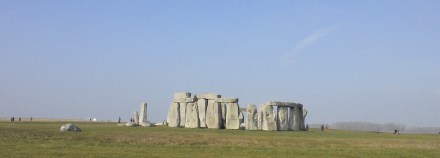
Everything needs to be seen within the correct context.

stone crop 2

Unless you know English landscape history fairly well, this is just a man standing next to a rock. And even if you did, you couldn’t be certain what you were looking at.

If we zoom out and look at a larger scale, is becomes this:

complete stone

Stonehenge 2016, Copyright T. Saltmarsh


But even then, this is not fully seen within the true context of its historical environment, with the additional burial barrows, the ditches and the surrounding landscape, mythological and physical.

The same comes when we are treating or working with clients, whether elite athletes or older people.

If we cannot see the bigger picture, or insist on just treating the problem they presented with, we will not be able to solve the problem effectively. A knee sprain may not heal if we don’t work with the coaching  staff to ensure the athlete gets corrective exercise prescription or time off lower limb loading. An older patient may not regain full range of motion if they are afraid of falling and therefore do not attempt the mobility plan you recommend. A desk bound client will still have the recurrent shoulder problems if they don’t tell you the whole story about the work and family related stress, or at least acknowledge to themselves that it exists.

So don’t just look at the rock, block or restriction, zoom out and take into consideration the environment it exists in.


Why you don’t need your osteopath

If you can squat, full range of motion, feet together and flat on the floor, arms above your head, you don’t need your osteopath.

If you can train without unexpected pain or discomfort, you don’t need your osteopath.

If you can be in one position for a long period of time (for example driving to competition) and know how to unstick yourself, you don’t need your osteopath.

If you can jump out of bed after a good nights sleep and not “feel your age”, you don’t need your osteopath.

If you do a regular mobility practice and have a solid knowledge of how to get yourself moving out of most issues, you don’t need  your osteopath.

Otherwise, call us and we’ll teach you: 01420 544408

And keep our number close for those acute, it just happened, injuries as well!


Focus on the now

Buddists and other meditators claim that there is no past, no future, only now. Yet we spend most of our time ignoring whats in front of us and instead thinking about what has been or what might be, not being in our heads and focusing on the immediate task. This is not to say that planning (an almost unique skill in humans) is not vital, as otherwise we would be wasting ourselves spinning in circles watching a small screen, but this long term plan has to be combined with appropriate action now.

From a movement perspective, when coaching clients in new patterns, I use 2 key words  as triggers. Attention and Intention. What is the attention on and what is the intention. For example, moving the shoulder joint, the attention is on the joint, the way it feels and glides, while the intention is that the arm should move slowly and under control at all times. Many find this very hard to do as the mind tends to rebel against focusing on just one thing. The same is with running, the attention cannot be on the whole activity, as  we cannot cope with such input, but instead on just feeling the push off, or the chest postion, or another skill.

A five minute challenge, when moving next time, ask yourself: Where is my attention? What is my intention? Not just in a movement pattern but when working as well, it may provide some interesting results.

5 secret productivity tips hipsters don’t share

We may laugh at them with their plaid shirts, slightly too short trousers and propensity for bizarre methods of transport, but hipsters, artists and other truly creative types have figured out some things the rest of us could learn from.


1. They don’t care what you think.

As a rule, we tend to spend far too long worrying about what others may think of us rather than just getting on, which just wastes time and energy. Simply focusing on who and what we are means we can get more done.


2. They get absorbed in what they are fascinated by

Whether it is making a cup of coffee, a pair of jeans, a piece of visual-kinesethetic art or the next best application for a smartphone, they get completely absorbed by it, learning everything necessary to create the perfect object. They know what to cut out, when to add something and how it all goes together. So, no matter what your current project, learning everything around it and spending time considering how it all goes together will pay off. Perhaps most importantly, learning when to stop is a vital element in this. For good coffee, not quite boiling the water is a key, for a painting, not doing one brush stroke too many is the difference between finished and ruined, for software not adding too many confusing features means the product is likely to be more popular.


3. They don’t get distracted when they’re engaged in their work

We are all constantly surrounded by potential distractions, attacking every sense. Cluttered work spaces, external noises, uncomfortable chairs all draw our minds away from the task. Mentally, we are constantly flicking between the work at hand and the inevitable list of things that still need to be done. Many artists have figured out how to overcome this by removing all potential distractions from around them by muting their phones, adopting a minimal attitude to their workspace or studio and by learning to focus on just one thing at a time until they reach a point of fatigue or satisfaction.


4. They know what they need to do each day

This is an important but often misunderstood one. Everyone has a huge number of things that need to be done, from buying groceries to calling a friend, doing laundry to cleaning the bathroom. However, on that enormous to do list, there are only one or two items that actually add value to each day, or simply have to be achieved to move a project forward.  Studies have indicated that we are only truly productive for approximately 5 hours a day. The rest of the time we are marginally less present and therefore not doing our best work. If we can allocate this to the two or three tasks on our list that will give the most effective return, then the rest of the time can be used to do the other subtasks, which are important but less relevant. These major points may be as simple as a phone call or email, or as complex as reading a draft contract proposal but they are, in general, the sticking point in any project. They may also not necessarily be physical. For example, although many artists appear to float around doing very little, they are almost certainly making connections, reviewing their work and thinking about the next step, long before they do anything with a brush or canvas. A programmer is similar, using mental time to reflect on the problem, consider solutions and then, only when they are fairly confident they have a path forward, do they apparently start  working.


5. They know how to use their tools effectively

Possibly the most significant development of the 21st century so far is the modern smartphone. An incredibly powerful computer, with instant access to the internet, it offers a world of possibilities and connections that even a generation ago we could not forsee. People all over the planet, provided they have access to an unrestricted cellular data network can now do things that may unleash an avalanche of unintended concequences in the near future.Micropayments, democratic pricing, medical information, the potential for positive change is huge.

For the majority of us in the west however, this astonishing device is little more than a way of getting cross at other peoples lives and staring at cat pictures, so although we may smirk at the old fashioned notebook, post it notes and pens alongside the latest iphone, we forget that they are still some of the most effective productivity tools.  A good notebook creates a physical relationship between idea and creation, a post it note allows instant visual referencing when laying out a project and acts as an instant, disposable record. It may be useful to pick up a phone and take a picture or research something on the internet but these can allow us to fall down rabbit holes of selection and distraction, whereas a simple paper record tend to direct us towards a more positive flow. The secret therefore is to know when to use each tool and how to best apply them to each task. For example, an artist may sketch shape, form or colour, make brief notes on things that inspire them and take photographs, a coder might use the post it notes to flow a specific software routine to ensure the best user experience, whilst making notes of code changes required and using the phone to keep in contact with people who can help with projects.


Whether you want to wear skinny jeans, collect japanese coffee makers or ride a unicycle, perhaps they have something that too many of us are missing out on. So put down the phone, pick up a pencil and free your mind to create 3 fantastic things today.


Gym Free Workout

Burpee – Long jump

Warm up, swinging arms and legs, jogging on the spot and checking range of motion drills, followed by quiet breathing.

Do 1 full burpee, then jump as far as possible along from a standing start, to land on both feet. Repeat for 2 minutes, rest 1 minute, repeat for 5 rounds (total 10 mins exercise, 4 rest intervals)

Warm down, mobility awareness and breathing for 3 mins.

What Physios don’t want you to know

And osteopaths, chiropractors or any other manual therapist.

Unless they are making special claims for their technique,  which they can back up with evidence,  the truth of the matter is that all manual therapies are doing one of three things-

  • Breaking down adhesions, scar tissue and restrictions, whether in fascia, muscle or connective tissue
  • Resetting the joint position sense and neural signalling around the affected area
  • Improving fluid flow and drainage of the tissue.

That’s it, that’s all we do. However, the reason you need to keep a good osteopath or physiotherapist on speed dial is because the real trick is knowing which one needs to be done, what tools and techniques should be used when, how and where, as the true cause of the problem may not be at the place it hurts.

One classic example of this, that many have suffered from and lots fail to treat effectively,  is plantar fasciitis. The too familiar pain lancing into the sole of your foot when you first stand up, it is caused by inflammation and microtearing in the fibrous tissue running along the foot, generally near the heel. Traditional treatment is to brace, stretch and possibly inject cortisone, all of which take time and often fail to address the question why it failed in the first place.

A better complete approach, using the above concept,  is to not just treat the foot locally,  but look away for restrictions and signalling issues elsewhere as well. Only then,  once the underlying issue is addressed,  can real recovery and progress be made.

Gym free exercise of the day.

2 minutes breathing practice while swinging arms and legs to open the joints.

3 X 30 seconds skipping on the spot, imagining a rope if space / equipment restricts.

5 x 1 minute Burpee superman interupt. 30 secs recovery between sets.

Squat down, thrust legs back to pressup position,  lower your chest to the floor then take hands up above the head to full extension. Raise opposite hand and leg off the floor. Repeat for the other side, then hands to chest, push up, legs back in to squat position and jump up.

2 minute breathing practice, with stretching.

Notes-

The objective of the warmup is to check and prepare joints for range of motion,  followed by getting the cardiorespiratory system ready.

The core of the workout is to get every muscle in the body firing to stimulate a high level of intensity. By lifting the arms and legs off the ground,  you break the fascial tension that can be used as a spring rebound mechanism,  so it becomes harder.

Scaling if you are unable to do burpees or pressups would be 3 standing air squats with a pause at the bottom, followed by 3 kneeling pressups with hand / leg lift. If the pressups are still too challenging,  wall pressups (pushing off the wall) followed by arm / leg extensions. If in doubt, try the one you think you might fail at to push yourself.