On: Rituals and routines

It seems like every influencer has their own special ritual and routine that helps them optimise their productivity, create more wealth and still manage to find time for their side hustle / thruple / vanlife trip around the pacific north west. And you can learn the secret if you listen to their podcast / buy their e-book / subscribe to their youtube channel.

And if thats true then I’m pleased for them, they’ve achieved some sense of balance and awareness in their lives.

For the rest of us, those who don’t speak fluent Aspiranto (the common language of the Antisocial media personality), some of the ideas can still offer us a benefit, especially if we draw our attention to them.

First though, definitions.

A routine is a sequence of actions that are repeated regularly, often without much thought. They can be simple, like brushing your teeth before bed, or more complex, like going to the gym regularly. As well as saving time and energy, they can also provide us with a sense of structure and predictability.

Rituals are also a series of repeated actions, but they are typically more intentional and meaningful than routines. Rituals can be religious, spiritual, or secular. Often performed less frequently, they can be performed to mark important life events, to connect with others, or simply to find peace and calm.

However, it is important to note that the distinction between routines and rituals is not always clear-cut. For example, a morning routine of yoga and meditation could be considered both a routine and a ritual, depending on the individual’s intention.

And herein lie the key differences: Intention, Attention, Focus.

To turn a routine into a ritual, we have to be fully present in the process. We have to understand the why , not just the what, and allow that awareness to be part of the process. And, we can often use symbols and anchors to help us trigger those patterns more effectively.

If, for example, you were brought up in the Western Christian Catholic tradition, then the smells and the bells would automatically allow you to access the full script for the ritual taking place, whereas it could seem confusing and overwhelming if you had never experienced it before.

These symbols and anchors can all be used to create a sense of belonging in those who have been initiated, and may create a barrier to those who are outside.

So, to improve an aspect of our lives, we can create a routine to support it. Want to drink more water, put in place a structure that encourages this with the use of triggers and anchor points. Feel that a 5 minute mobility routine would offer some benefit to your overall health? Make it simple to carry out. Look at what is currently stopping you and remove those barriers.

And, to make the mobility a meditation, or to use the water break as a gratitude practice (both of which are backed by real science to offer benefit), then choose your focus in the moment to be on your breath, on the process, on reflection, rather than carrying out the motions.

On: Galen

The history of medicine is littered with men, and women, who even today, have an impact on the way we treat and are treated when we are ill.

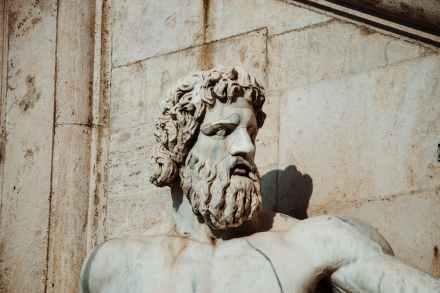
One of these, and one of my favourite, was Galen. A Greek physician who practiced in the 1st Century CE Roman Empire, he studied extensively before moving to Rome and eventually becoming physician to the Emperors, and Gladiators. This gave him significant insight into many areas, and although we now know that many of his thoughts on illess and physiology are incorrect, a great deal of his work is still relevant.

Two of his tenets, which I believe still stand, and we still use are:

The body is a complex interconnect system, which has the capacity to heal itself. This is very similar to the osteopathic principles.

Use physical therapies first, then drugs, then surgery.

This last principle is still undervalued by both patient and practitioner, as it is not an easy fix, and given today’s current phamacopea, it is too easy to reach into the cabinet and take a pill rather than look for an underlying cause.

I would advocate to choose to be different. Seek the cause, make a change and overall health will improve.

How we move affects how we think

There is a connection between how we move, how we breathe and how we think. This connection is well known and recognised in many traditions, and even by a running shoe manufacturer, but most of us ignore the cues that are there, if we were to tune into our bodies a little more.

I was discussing this recently with a professional singing and breathwork coach, and having worked with people with varying levels of paralysis, it is possible to see the way thought is entrained to the breath cycle.

As the coach showed me, we begin each thought with a breath and generally reach the end of the thought before the end of the breath. However, if we are unable to hold a deep breath for long enough, our thoughts can get chopped off by the need for air.

Thus we may begin the thought again, creating a frustrating cycle of thought and breath. But by allowing ourselves the space to breath and think, to move and breath, and to move and think, by acknowledging that this cycle takes place then we can help it all to work more effectively.

And, through seeking professional support, to optimise our breathing, to find balance in the respiratory system as well as the rest of the body, then we can improve even more.

The big secret the fitness industry doesn’t want you to know.

They’re lying to you. They have been for years and maybe even they’re lying to themselves.

They’re selling you all these messages and machines and plans and regimes. And they’re not going to work, leaving you disappointed and looking for the next big secret. The next short cut.

So, what is the secret they don’t want you to know?

Exercise won’t make you lose weight. Diet won’t get you fitter.

All the booty classes and HIIT training and smoothies and shakes don’t work alone.

Maybe if you’re running 5-6 hours plus a week then yes. You may lose some weight. You are going to create a significant enough caloric deficit to see a difference. But not much and not for a sustained period. If you don’t back it up with a solid refuelling and recovery strategy.

You’ve got to do both, in the correct proportions.

Look at a visually super fit person, that influencer, gym bunny. Not only are they exercising frequently, they’re looking after their nutrition. They’re not completing the circuit class and immediately down the coffee shop for a syrupy latte. The inside is reflected on the outside.

Exercise is for fitness, nutrition is for weight management. The combination leads to improved health. Which is reflected in your physique.

You don’t need their latest method or protocol or supplement. It’s been said before but you don’t like it because it’s hard and slow and repetitive and dull.

  • Eat to sustain activity, refuel and recover.
  • Eat occasionally for pleasure.
  • Exercise to improve muscle mass
  • Exercise to improve cardiovascular health
  • Exercise to maintain balance and skill
  • Exercise because it’s fun
  • Do it regularly and seek healthcare advice when something seems wrong for a while.

Simple is not the same as easy. But consistency and iteration works.

Resilience and capacity

In the end you have to have something that I give to give the disease as a price of recovery.

Not sure where I heard that but it makes sense.

The more fitness, the more muscle you have to give a serious illness, the more likely you are to come out the other side.

Professor Oliver (geriatrics) noted that he could guess someone’s probability of a safe discharge from the quality of their handshake. Firm, strong, reassuring. Weak, flaccid, concerning. A handshake conveys vitality, determination, strength, even psychological state.

Put the work in now so your future self can live to fight another day.

On: timing shift

From the beginning of May 23, we will be open on Thursdays rather than the previous Fridays.

Roles are changing at other organisations, leading to a change in clinical hours.

We will be available from 1000 – 1700 on Thursdays.

On: Toxic Productivity

Rise and grind.

Hustle harder.

Do this one thing to be 10x more productive.

Entrepreneurs and millionaires do this one thing to be more productive.

This stuff is pushed at us all the time.

The secret trick to getting more done, the subconsious message that we are not being as productive as we could be, that we could do more, get more, have more shiny things.

Why? Why be more productive just for the sake of it? Why push yourself, risk burning the candle too far, neglecting the things that are actually important for the things that we are told are, but are simply marketing mush for someones company.

Step back, slow down, reassess.

Turn the question around. Am I doing enough to be satisfied? Do you need the second job, the productivity hack, the apparent short cut? If you do for financial reasons, then accept that, it sucks, especially if it is out of your control. If you are doing it to keep up with the challenges at where you work, are the pressures on you realistic or are the people above you using you?

Any why are we talking about this at a health clinic? Because that pressure to be “more” can have negative consequences on your mental and physical health. Yes, pushing to complete a specific goal is sometimes worth the expended effort and the recovery time after, but to keep that up endlessly leads to the wheels falling off at some unspecified time in the future, which can make you more of a liability.

Instead, aim for minimal effective dose. The least output required to exceed your needs. This leaves some in the metaphorical tank for situations beyond control, develops stress resilience and still allows you to meet the expectations on you.

Don’t be a liability.

Do that which satisfies you.

On: Simple

Simple is not easy.

Its simple to do the right thing in any situation, but most of the time it is neither easy to discern, nor to act on.

The discernment is the first and possibly most challenging step. This requires much reflection and patience.

Once you have identified the overall goal, it is easier to understand the steps to progressing.

To simplify, and once you have removed the obviously superfluous, you can also:

  • Delegate
  • Habituate
  • Automate

If there is something that you do daily, can you automate it? Is there a way of making technology support you, so you don’t need to worry about it?

If you can afford it and have no love for it, or no skill for it, can you delegate it?

If you have to do it yourself, can you make it a habit so that it is an unconsious process?

Looking at 2 common goals, weight loss and fitness.

Very broad brush and one reason why most people fail is that there is no end point, and therefore no positive feedback or marker of success.

Rather than weight loss, focus on improving a marker for health thats pertinent to your, whether that is HbA1c (a long term marker of blood sugar), cholesterol, blood pressure and so forth. The changes you will make to improve those will often have a positive side effect of improving your weight as well. Or, improve your height to waist ratio, which will have the same outcome.

How? Simplify – remove the things from your cupboards that you know tempt you, or ask people to reduce your access to them. Delegate: See input from a qualified professional who can provide both motivation and expert guidance towards your goal, not just an internet celebrity. Automate: Set up reminders,

With fitness, choose an event you wish to complete. Then tell people about it. By putting a public commitment up, you will have more drive to do the work necessary to succeed. And you will improve your fitness almost as a side effect.

Play

Eventually we forget to play. Sometime around our teenage years, we forget to play. Activity becomes organised or shunned.

We play sports, we play chess, but we forget how to play.

How to explore our natural environment through movement, and skill development.

Flex, extend, twist, push, pull, squat, lunge, balance, throw, run, play.

Through play, we can explore and improve our capacity, our skills, our human experience.

You don’t need special equipment, simply comfortable, flexible clothes.

Curbs become balance bars, parks become play areas, street furniture… you choose.

Fluid

We are 60 -70% fluid. It flows in our blood vessels, squeezes round the lymphatic system, cushions our joints, sits between our cells and keeps us moving.

Yet we rarely use fluid movements when we move. We rarely think about it when we stretch, exercise or train. We almost never consider the effect of movement on the fluid flow, how we pump that precious ocean around us.

And most of the time that’s fine, the body will manage itself ok, it has done for years.

But maybe, being present and considering fluid might add an extra dimension.

When stretching, imagine the tissue being squeezed like a sponge, and allow a fluid pump to take place. When mobilising joints, hold that synovial fluid in your mind and feel it cushion, protect and lubricate. Give time in each position for the fluid to flow, in or out.

And be fluid in your movement.