3 things

All you need to do to make progress is 3 things. 

Do it consistently and you will make huge progress. 

What those three things are depends on what your goal is and where you are. 

Want to make progress on a project? Do three things off your list. Some will be time orientated, some not. 

Want to improve your health? Eat, move, rest. 

And if you can consistently do 3, make it 5. But make sure you do them all before the end of the day. 

The trick works because it helps break inertia and provides momentum, mentally and physically.

Just three things, for each thing you wish to achieve. 

This even works if you’re  suffering with depression or other mental health issues. 

Focus on just doing three things. 

A personal care item (shower,clean teeth, shave), a healthy meal, a walk. 

Then, no matter how the rest of the day goes, you’ve done 3 positive things. 

Be Ready….

If you can run 10k in 40 minutes but not carry your buddy 200 yards, are you ready?

If you can squat twice your bodyweight but can’t even run for a bus, are you ready?

If you can walk for hours with a pack but can’t climb a rope, are you ready?

If you can’t swim 25m in a pool, clothed, are you ready?

You never know what life will throw at you. It may be carrying a sick child home from a day out, helping a friend move house, walking across town because the traffic is messed up, or even being caught up in a situation where your skills and fitness are vital to keep yourself, and those you’re responsible for, safe.

Chris Hadfield, in his book “An Astronauts Guide to life on Earth” has a point about being a zero.  You might not be a direct asset to the situation at hand, but you really don’t want to be a burden. Being fit and ready to respond makes you a better zero.

We all like to think we’re fit, but have no idea what that actually means. Being able to run 10k fast is a skill but if you’re washed out for a week after, that isn’t so great. Being built like a rugby prop is useful, if you play rugby. But those guys and girls can also run very fast (at least the professionals), can you?

For its many detractors and weaknesses (not enough endurance based cardio respiratory training in most boxes), crossfit and its like offers a great way of being a better human. Not only do you get faster, fitter and stronger, you can develop mobility and recovery.

Of course, you don’t need to join an expensive box to improve. A few basic kettlebells, sandbag and jump rope are all you need to start.

And get some first aid training. The basics really are basic but could save your life and those who you love.

So be a better human and a positive asset to everyone around you. Get after it.

Linked below is a basic training plan and ready guide. It assumes you can move without pain but little else. Caveat: See a medical professional before starting any new form of exercise plan to make sure it isn’t going to kill you.

Be Ready V2

Open 16.4, its mental

Scaled Workout

13 minute AMRAP

  • 55 Deadlifts @61kg
  • 55 Wall balls, 9kg to 9ft
  • 55 Cals row
  • 55 hand release pushups

Watching a team mate at the gym struggle through 16.4, it was interesting to note the effect of his mental state on his performance.

I know, from having trained with him, that he is stronger and better than me at all of the moves needed.

But for some reason, he was scared of it. He’d backed out at least once and finally had to face it to get an open score.

Training was not able to parse into competition and this is something you can see frequently. Strong guys and girls crumble under pressure and they perceive themselves as failing.

Dry run it. See the success in your head and take it on from a position of winning before you lift the bar the first time.

And in the end, he did well, getting a full round in before the clock ran out.

Title, Plot, Outcome

Following the current theme of stories, the concept of narrative flow can be used for checking decisions.

If you were reading a book by your favourite author and the lead character were to be making the decision you need to make, how would you react? Does it move the story arc in a positive direction, is it going to add an interesting diversion that they can learn and grow from, or would you be mentally screaming at them to not do it?

This can be applied, whatever the decision you need to make, whether it is to get up and go to the gym, go out with friends for a relaxing meal, or which academic course you need to follow next. By adding a layer of critical analysis and an objective viewpoint, you can check in and make the best decision for your plot.

And of course, sometimes the hero needs a little help, so find your supporters, from coaches to osteopaths, and make a winning team.

Trust the way will appear Indie, and take that step.


Context!

Everything needs to be seen within the correct context.

stone crop 2

Unless you know English landscape history fairly well, this is just a man standing next to a rock. And even if you did, you couldn’t be certain what you were looking at.

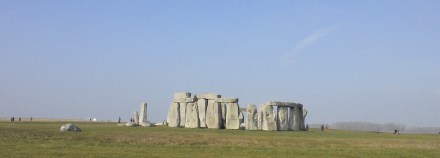
If we zoom out and look at a larger scale, is becomes this:

complete stone

Stonehenge 2016, Copyright T. Saltmarsh


But even then, this is not fully seen within the true context of its historical environment, with the additional burial barrows, the ditches and the surrounding landscape, mythological and physical.

The same comes when we are treating or working with clients, whether elite athletes or older people.

If we cannot see the bigger picture, or insist on just treating the problem they presented with, we will not be able to solve the problem effectively. A knee sprain may not heal if we don’t work with the coaching  staff to ensure the athlete gets corrective exercise prescription or time off lower limb loading. An older patient may not regain full range of motion if they are afraid of falling and therefore do not attempt the mobility plan you recommend. A desk bound client will still have the recurrent shoulder problems if they don’t tell you the whole story about the work and family related stress, or at least acknowledge to themselves that it exists.

So don’t just look at the rock, block or restriction, zoom out and take into consideration the environment it exists in.


Focus on the now

Buddists and other meditators claim that there is no past, no future, only now. Yet we spend most of our time ignoring whats in front of us and instead thinking about what has been or what might be, not being in our heads and focusing on the immediate task. This is not to say that planning (an almost unique skill in humans) is not vital, as otherwise we would be wasting ourselves spinning in circles watching a small screen, but this long term plan has to be combined with appropriate action now.

From a movement perspective, when coaching clients in new patterns, I use 2 key words  as triggers. Attention and Intention. What is the attention on and what is the intention. For example, moving the shoulder joint, the attention is on the joint, the way it feels and glides, while the intention is that the arm should move slowly and under control at all times. Many find this very hard to do as the mind tends to rebel against focusing on just one thing. The same is with running, the attention cannot be on the whole activity, as  we cannot cope with such input, but instead on just feeling the push off, or the chest postion, or another skill.

A five minute challenge, when moving next time, ask yourself: Where is my attention? What is my intention? Not just in a movement pattern but when working as well, it may provide some interesting results.

The only person to compare yourself to. 

Not the guy in the next squat rack, not the girl on the yoga mat who can tie herself in knots and always looks perfect, not the professional on the tv. The only person to compare yourself to is….

You. 

Are you a little bit better than you were yesterday? 

Age inevitably degrades our performance slightly over time, with some researchers considering the average value to be 10% per decade, but most of us haven’t achieved our true potential in any decade so there is no reason why most of us cannot at the very least maintain results with improved efficiency and technical skill. 

Rather than using any comparison as an excuse, figure out what you need to do to be 1% better. Harder work is not always the answer, instead see if you need to get out of your own way by working on mobility, becoming more efficient or focusing on a specific movement. 

Gym free workout of the day

Got 10 minutes? Want to change your life for the better? High intensity short interval work has been shown to be highly effective. Try the following:

  • 2 minutes seated wheel breathing 
  • Then complete as many rounds as possible in 5 minutes of: 5 burpees / 3 inch worm pressups
  • 3 mins wheel breathing

Guidelines 

Wheel breathing– sitting comfortably, focus on your breathing. Allow each inhalation to be followed, smoothly and slowly by each exhalation. Picture yourself successfully going through the workout efficiently, effectively and relaxed. Afterwards, just focus on letting each breath flush all the stress and fatigue from your body, so you’re ready to face the day. 

Burpees– start standing straight, squat down hands on the ground, thrust feet backwards to press-up position, pressup, reverse to stand with a jump out of the squat. 

Inchworm pressups– start standing up, bend forward to touch toes, walk hands out until you are in the pressup position, lower down, hands off the ground into a back extension, reverse to get back up. 

Scaling versions

Burpees- 1 burpees is 3 air squats jumps. Squat down, knees behind toes, then spring back up to jump as high as possible. 

Inchworms- kneeling pushups with back extension. Kneel down, lower yourself smoothly, hands off and extend the back, then push back up again. 

Whichever version you do, try to keep going for the whole 5 minutes.

Semper Pergendum!  

The Camford Clinic. Professional osteopathic sports injury and life management in Alton, Hampshire. 

01420 544408

Info@the-Camford-clinic.co.uk