Context!

Everything needs to be seen within the correct context.

stone crop 2

Unless you know English landscape history fairly well, this is just a man standing next to a rock. And even if you did, you couldn’t be certain what you were looking at.

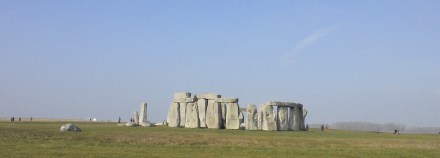
If we zoom out and look at a larger scale, is becomes this:

complete stone

Stonehenge 2016, Copyright T. Saltmarsh


But even then, this is not fully seen within the true context of its historical environment, with the additional burial barrows, the ditches and the surrounding landscape, mythological and physical.

The same comes when we are treating or working with clients, whether elite athletes or older people.

If we cannot see the bigger picture, or insist on just treating the problem they presented with, we will not be able to solve the problem effectively. A knee sprain may not heal if we don’t work with the coaching  staff to ensure the athlete gets corrective exercise prescription or time off lower limb loading. An older patient may not regain full range of motion if they are afraid of falling and therefore do not attempt the mobility plan you recommend. A desk bound client will still have the recurrent shoulder problems if they don’t tell you the whole story about the work and family related stress, or at least acknowledge to themselves that it exists.

So don’t just look at the rock, block or restriction, zoom out and take into consideration the environment it exists in.


The only person to compare yourself to. 

Not the guy in the next squat rack, not the girl on the yoga mat who can tie herself in knots and always looks perfect, not the professional on the tv. The only person to compare yourself to is….

You. 

Are you a little bit better than you were yesterday? 

Age inevitably degrades our performance slightly over time, with some researchers considering the average value to be 10% per decade, but most of us haven’t achieved our true potential in any decade so there is no reason why most of us cannot at the very least maintain results with improved efficiency and technical skill. 

Rather than using any comparison as an excuse, figure out what you need to do to be 1% better. Harder work is not always the answer, instead see if you need to get out of your own way by working on mobility, becoming more efficient or focusing on a specific movement. 

Gym free workout of the day

Got 10 minutes? Want to change your life for the better? High intensity short interval work has been shown to be highly effective. Try the following:

  • 2 minutes seated wheel breathing 
  • Then complete as many rounds as possible in 5 minutes of: 5 burpees / 3 inch worm pressups
  • 3 mins wheel breathing

Guidelines 

Wheel breathing– sitting comfortably, focus on your breathing. Allow each inhalation to be followed, smoothly and slowly by each exhalation. Picture yourself successfully going through the workout efficiently, effectively and relaxed. Afterwards, just focus on letting each breath flush all the stress and fatigue from your body, so you’re ready to face the day. 

Burpees– start standing straight, squat down hands on the ground, thrust feet backwards to press-up position, pressup, reverse to stand with a jump out of the squat. 

Inchworm pressups– start standing up, bend forward to touch toes, walk hands out until you are in the pressup position, lower down, hands off the ground into a back extension, reverse to get back up. 

Scaling versions

Burpees- 1 burpees is 3 air squats jumps. Squat down, knees behind toes, then spring back up to jump as high as possible. 

Inchworms- kneeling pushups with back extension. Kneel down, lower yourself smoothly, hands off and extend the back, then push back up again. 

Whichever version you do, try to keep going for the whole 5 minutes.

Semper Pergendum!  

The Camford Clinic. Professional osteopathic sports injury and life management in Alton, Hampshire. 

01420 544408

Info@the-Camford-clinic.co.uk

Stability and Mobility

Picture a runner on the track, an image of power ready to be released at every stride. If we were to snapshot them mid activity, we would see that:

  • The foot, as it contacts the ground, needs to provide a stable platform
  • The ankle, resting on the foot, requires dynamic mobility
  • The knee, for optimal power transfer, requires both mobility in the ankle below it and the hip above.
  • The hip, being a joint with a high potential range of motion, should be mobile enough to support the function of the knee below and the pelvis / lumbar spine above.
  • The pelvis and lumbar spine, one of the biggest force transfer areas in the body, needs a high amount of stability.
  • The thorax responds to load and stress by restricting, when a more fluid movement pattern would benefit
  • The scapula, floating over the potentially stiff thorax, becomes unstable as a compensation
  • The shoulder joint itself, due to posture and poor use, will be restricted
  • The lower cervical spine may become unstable as a response to the restriction in the thorax
  • Finally, and balanced on top of the stack, the head and upper cervical spine stiffens.

Looking at the above list (initially drawn from the work of Gray Cook) it is possible to see why, if one area is not functioning as optimally as we might like, the areas around it will adapt their own function to compensate, which can eventually lead to the risk of injury.

As athletes and professional practitioners, we can help reduce this risk by reversing the process with a well considered mobility and strength training plan, allowing us help the areas that don’t move and should, as well as strengthening the unstable zones.

From a practical perspective, it is generally faster and more effective to get a restricted area moving successfully, since it tends to respond more positively, as well as naturally allow the unstable areas to relearn their correct function,

It can therefore be recommended that we focus on:

  • The ankle, using ankle circles, calf stretching and getting any old twists or sprains reset
  • The hip, by stretching the glutes, lengthening the hip flexors and ensuring the joint is well aligned
  • The thorax, needs three dimensions of movement, flexion, sidebending and rotation
  • The shoulder, the most inherently unstable joint in the body, often needs professional assessment to ensure it is not guarding a hidden injury to the joint, and can be helped by improving the function of the internal and external rotation most effectively

By improving the range of motion in these, we can support dynamic development in the rest of the body automatically.

Total body circuits for injury detection and prevention

There are a few simple exercises that, if carried out correctly, can help prevent injury in other areas of training by allowing you to spot where and when you are weak.

Amongst my favourites are:

Kettlebell swings. Preferably a full range of motion. http://www.catalystathletics.com/exercises/exercise.php?exerciseID=251These work pretty much everything and can be used for strength, conditioning, warmup, incredibly useful.

Turkish getups. http://www.catalystathletics.com/exercises/exercise.php?exerciseID=255 They look simple but demand huge range of motion and coordination of all the major joints to be successful.

Single arm overhead squats. http://www.catalystathletics.com/exercises/exercise.php?exerciseID=236 Another all over body exercise which will make everything fire in the correct sequence.

Dead hang pull ups http://www.catalystathletics.com/exercises/exercise.php?exerciseID=39

Mountain climbers, just to finish off http://www.youtube.com/watch?v=1J4hRICVjRo Focusing on maintaining a stable trunk throughout the movement.

By doing these as a circuit, ensuring good form at all times, they should prepare you for any other, more focused gym work or training you wish to do. Or, if you’re time compressed, just doing a 10 minute of a few of them (not everybody has a suitable pull up station in their home) will bring huge benefits.

One of the best resources for improving mobility is Mobility WOD, which has hundreds of excellent videos for fixing all the areas you may feel are restricted.

And if in doubt, come and see us for a full assessment of the issues.

Unlock your potential

What would happen if you could:

  • Train more effectively
  • Recover faster and more efficiently
  • Heal from injuries quicker
  • Maximise your resilience

It would unleash your performance in every area of your life. You would have more time to spend on relationships, work or play, achieve more when competing and have less noise in your head when the time comes to focus.

The secret? To get out of your own way. Most of us are held back by learned patterns, old injuries and poor habits, trying to do more and more with less and less. Restrictions in one area reduces the body’s capacity to deal with stress in others. A tight hip will shorten your stride and overload the achilles, a stiff upper back will drop your maximal squat, restricted shoulders will limit your press or swim stroke. Mentally, stress at work will reduce your ability to make solid nutritional choices, family concerns will eat into your training mindset, anxiety will limit your performance at competition time.

If you can figure out what is restricting you, then removing those blocks can make huge differences.

Each persons blocks are different. Physically, look first at the ankles, hips and thoracic spine. Any old injuries, scarring or tissue changes (tight, weak, short) can affect the rest of the body in many ways. Can you perform the basic movements (push, pull, bend, squat, lunge etc, cleanly and pain free?)

Another physical issue is not listening when we need to rest, by ignoring the subtle clues in our physiology. Is your resting heart rate elevated, are you feeling more fatigued than normal for this workout, is your nervous system tired? (This can be tested via heart rate variabiity apps and simple biomechanical tests). Are you sleeping sufficiently? Once those areas are cleared, look at specific areas related to your sport or discipline and optimise your strengths and minimise the weaknesses, a process that will take a lifetime of self observation.

Mentally, we are always fighting against the patterns and habits picked up from everyone around us. Fear that we are not training hard enough can lead to overtraining, learning not to listen to the inner voice of weakness during a difficult moment, belief in an internal monologue that tells we are not good enough, often imposed by others, copying or competing with our training companions when we should be backing off.

By reading the cues, listening to ourselves and seeking the support and expertise of professionals, you can unlock your true potential in every domain.

Power, paths and chains

I have been thinking about simplifying stretching processes around exercise. Not when trying to repair or prevent injury but as a general mobilisation. Out of this, it is possible to spot a couple of patterns that are easy to follow, cover all the major muscle groups in the body and allow us to achieve the most benefit from our stretching time.

The body has an anterior and posterior chain (originally and well described in the work of Tom Myers), as well as the basic or prime moves.

By combining the basic requirements for movement (flex / extend / rotate) in all joints together with chain connections (it is possible to open up and stretch the whole body very smoothly.

Starting with the spine, we need to create flexion, extension, rotation and sidebending, focused on the articulation of the intravertebral joints rather than faking apparent range of motion with the peripheral limb movements. Hands on opposite shoulders (crossed in front of chest) and turn spine left and right, then flex forward (from the diaphagm) and arch back. Finally sidebending both directions to finish the moves.

For the front chain, step into a open lunge, keep the pelvis neutral (most important), extend the opposite arm as though stretching the chest and turn the upper body in the same direction. You should feel a gentle tension across the whole line. If you are unable to sustain this, it can be split into sections but needs to be considered part of the whole. The sections being kneeling lunge for upper body to pelvis and quad stretch for lower body. Repeat both sides, of course.

For the back line, a sitting figure 4 stretch (foot into opposite knee and lean into straight leg) covers most of the groups.

Finally, lie on your back, pull your knees up so knees and hips are comfortably angled, then let them drop to one side so that the glutes are stretched, together with the back chain. This can be amplified by putting the opposite arm out and stabilising the upper body.

Of course, these are best demonstrated in a clinical situation, so that they can be tuned to your body, however by paying attention to both your attention and intention, then good results can be acheived.

3 dietary changes that could save you

Clinically, we all ask the endocrine questions during our case history taking. Are you sleeping ok? Do you feel tired all the time? Have you noticed any untoward changes in your hair, your skin, your weight? Are you feeling much more thirsty? Are you feeling too hot, too cold? These cover many different symptoms and pathologies and if any of them don’t add up, we know to refer to other medical professionals for further investigation and treatment.

But what of those subclinical ones, changes that are sitting in the background, induced by life patterns. Borderline type 2 diabetic, adrenal fatigue, chronic overtraining. Is there any advice we can safely give that could help that person and make sure they don’t fall over the edge and need medical intervention?

Cushing syndrome describes the signs and symptoms produced due to prolonged and excessive cortisol exposure (from overstimulation of the adrenal glands due to pituitary gland issues).

These include [1,2]:

  • Centralised (around the torso) weight gain
  • Fat pads on the back of the neck and clavicle,
  • Thinning of the skin
  • Bone loss
  • Glucose insensitivity
  • Memory changes and concentration issues

Some of these symptoms may look remarkably like the effect of prolonged stress on many people who will be presenting to us as patients.

Another cause of adrenal fatigue is over training in athletes. To them, if some is good, then more is better. The flaw in this logic is that, past a certain point, more becomes destructive, with the body no longer able to deal with the training load, leading the athlete to slow down, more tired and more prone to injury and illness. So they push harder, train longer and eventually run the risk of systemic collapse. The hormonal response in this depends on the sex and makeup of the person in question but in all cases, there may be evidence of adrenal fatigue, insulin resistance and muscle metabolisation [3]

Type II diabetes, or late onset occurs when the body becomes resistant to insulin and is often caused by obesity. Typical symptoms include increased thirst, increased frequency of urination and increased hunger. The effects of diabetes in any form are multi factorial, leading to potential peripheral neuropathy, damage to the eye sight, systemic organ failure and increased healing times in the skin. This is most commonly treated through a combination of diet, exercise and medication if necessary.

The commonality between these conditions is the recommendations offered for recovery and healing. If a patient is suffering from Cushing Syndrome  they are advised to take a low carbohydrate, low calorie, high potassium diet [2]. In diabetes, the patient is told to lose weight, change their dietary patterns and reduce their carbohydrate intake significantly. In a recovering athlete, they need to reduce the stress on the body, look at their dietary patterns and ensure they have sufficient protein in their diet to allow full muscle and immune system recovery. Magnesium is also recommended as it has been shown to lower cortisol, help improve mood swings, improve glucose sensitivity and help manage blood pressure [4]. Omega 3 oils have been indicated as beneficial in helping deal with the mental effects of cortisol and as such, can help with cognitive processes in all the above cases.

The message, time and again, is that a lower carbohydrate diet is beneficial. There is little evidence we need carbohydrate to the extent that we need proteins and fat. It is a highly efficient source of fuel but one that needs to be used rapidly, otherwise it is metabolised into fat in the liver. With athletes, it is important that they receive sufficient energy to support their performance and healing but some believe that this should be achieved by increasing their fat intake. Quite how much carbohydrate is still in discussion but the consensus appears to be drifting to less than 100g for sedentary people (strict advocates would suggest lower). For athletes it is harder to factor, since they are burning so much more but they might consider fueling around training sessions and health status with fat as the dominant energy source.

Take home tactics?

  1. Magnesium supplementation (250mg per day)
  2. Significantly less carbohydrate
  3. Omega 3 oils

Simple and with reduced adrenal stimulation, very successful.

References

1: http://en.wikipedia.org/wiki/Cushing’s_syndrome

2: Pathophysiology Made Easy, Lippincott, Williams and Wilkins 2006

3: http://en.wikipedia.org/wiki/Overtraining

4: G. Paolisso, A. Scheen, F. D’Onofrio, P. Lefèbvre (1990), ‘Magnesium and glucose homeostasis’, in Diabetologia, 33: 511-514

168 Hours

There are 168 Hours in a week.

We sleep, on average, for 56 (8 hours a night)

We sit and work for 45 (9 hours a day, 5 days a week)

We sit and commute for 10 (1 hour each way, 5 days a week)

We sit eating, reading or watching TV for 21 (3 hours a day, 7 days a week)

That leaves 36 hours to do other things, mostly at the weekend.

That which we do the most of, we become.

An hours exercise or movement a day really doesn’t seem much to ask does it? And if you recieve treatment for half an hour a week and change nothing else, how can you expect it to work?

Wobbly sticks and string

Most people have seen a tensegrity model. These are clever constructions of sticks and elastic that use balanced tension and compression to created self supporting shapes.

(Image taken from http://dotensegrity.blogspot.co.uk/2011/01/make-your-own-tensegrity-model.html)

It is possible to consider the body as a tensegrity model, where the bones, muscles and ligaments all act together to support, articulate and move.

Although simplistic and missing huge elements of the effects of fascia, organs, inflammation and so forth, it is a useful analogy to hold, especially when trying to educate patients.

Recently, I have been considering the lumbar spine and the need for good abdominal support around it. The metaphor I use it that of a wobbly stick attempting to link upper and lower halves of the body. The pelvis is a fairly stable, solid object and the thoracic spine is well held with the ribs. This leaves the cervical spine (a wobbly stick with a block on top) and Lumbar spine to do a lot of work. Therefore, we need plenty of active muscles recruited to provide stability, support and movement.

So, no matter how much we may train that six pack and work to get well toned abs, if we cannot recruit them during activity, its fairly pointless.

I have 3 basic exercises I start with for every patient and, if they can do those, move to the next level. These are:

Pelvic control: The patient lies supine, slides one heel up the couch or floor, whilst attempting to maintain a level pelvis, the ASIS not deviating significantly posteriorly. Recruitment of the TA is particularly useful in this.

Cat crunches: On all 4s, the patient pulls their navel towards the spine, attempting to keep everything else still. A count of 5 and release slowly. This helps recruit deep obliques and the thoracolumbar fascia attachments.

Gluteal raises (trendelenburg drops). The patient stands sideways on a step and allows one leg to drop. They raise it back up again, using the opposite glutes, minimising recruitment of QL or lumbar erector spinae if possible.

Once they’ve got these, then the neuromuscular paths are working better and we can progress to more dynamic tests.

No more wobbly stick, less back pain.

Program design in fitness

Following some recent research, I have been thinking about the way we approach fitness training.There is some evidence that there are 2 modes in the body and we need to activate both for the best output. There is the short time, high intensity work and then the long, slow output.The problem is, when we train with people, we don’t focus on these, we fall onto the middle ground. It’s easy. We don’t need to work hard, we don’t need to push the client. But then they don’t improve, they get disheartened and our reputation isn’t enhanced.

Instead of taking them for a jog around the park, change it up. Make them sweat, push them hard. Use the primal patterns, look at complex movements if they are capable of them. And if they’re not, get them ready.

And then guide them to being more active every day (the long slow stuff). Help them change their diet so they eat clean.

They will see changes and you will enhance your reputation too!