On: Suffering

Suffering – to undergo pain or hardship.

Suffering is a subjective experience. Experiencing is objective. The difference is critical, and multifaceted, but is essentially context and control.

A person has a respiratory virus. They experience all the symptoms of congestion, headache, sneezing, fatigue. They only suffer with a cold if it makes them miserable as well. And if it does, thats allowed. Being ill is awful.

People in conflict zones undergo extraordinary hardships, as destruction and the potential for death surround them, with little opportunity to escape. And yet, so many of them are far more resilient than those of us who fall apart if Disney+ cancels season 2 of our favourite show. Somedays, especially with loss, grief and pain, I am sure they are suffering enormously.

The same goes for many other areas. People experience a life changing injury. They only suffer if they don’t get the support, medical care and rehabilitation that they need to allow them to return to independence and a fulfilling role in society, AND, they choose the path of misery and suffering, with the adjacent loss of control.

That choice is hard. Incredibly so. It is a choice they make every day. To suffer, or to experience, to live with or in spite of?

From having spent many years with these people, I admire them all, and especially the ones who choose to lean in to it.

From them, and from conversations with many of them, as well as reflections of my own, I offer the following thought.

It is.

Today it is hurting. Today is is raining, Today I have a cold. Today I have a back pain and didn’t sleep well, the children are playing up and I have worries about the council tax bill.

But.

I am still me, I am still a parent, I am still loved, I am still interested in art, science, reading, steam engines of the mid 20th Century, whatever forms part of your self identity.

It is, I have, not I am.

Labels are for shopping, or nasty little lists. Don’t take a label.

I am, it is.

On: The power of words

Words have power. This has been known for a very, very long time.

The words we say to each other, the words we say to ourselves and the words we use to describe the world around us.

By reframing the words we use, we can change the way we view the universe. Even the language we speak with changes the way we interact with the world around us.

The internal monologue we have can change our entire day, or even path of life. So does everyone elses. And of course, these things can be deep and challenging to deal with, so are far beyond the remit of such pages here.

With that in mind, the following are suggestions that can allow us to catch ourselves in simple situations that may then offer benfit to the way we approach certain circumstances.

For example. You injure a knee on a run, which limits your mobility while it heals. If you start telling yourself that you cannot do things because of your knee, then you are creating limitations within your mindset. However, simply by saying that in spite of the knee you can do activities that maintain your fitness, you will optimise recovery, improve your mindset and view the current difficulty in a better light. That is not to say that it is not a difficulty, but the perspective shift of the barrier changes its height.

Or. Change “I can’t” to “how can I?” Shift the view of the problem.

Within a medical setting, we often get patients expressing suffering. Suffering is subjective, valid and to be believed. However, as a professional, you can help reframe the situation by the use of your language patterns to check in with what they are experiencing. From suffering to experiencing does not and should not invalidate their personal reality, but may help explore what it means at that point.

Again, within a medical or caring setting, empowerment is important. If we help someone, we can often disempower them and either create passisivity or an unbalanced dynamic. So instead of helping, consider or ask how you can support them. If they have limited abilities for any reason, then this can help set the correct tone for them to communicate their needs, rather than having your “help” thrust upon them.

If you have repetitive and perhaps tedious tasks to help those around us, from small children and work colleagues to aging relatives, and find yourself saying that you’ve got to, reframe it to get to. I’ve got to take the kids to football – I get to watch them learn new skills. I’ve got to see my grandfather this afternoon – I get to spend time with my grandfather. And so forth.

And sometimes, if you don’t know what to say, say nothing. Supportive silence is much underrated and certainly underused. Slow down, check in with yourself and say nothing.

In spite – because of

Can’t – how can

Suffering – experiencing

Got to – get to

Silence.

Onwards.

On: Rituals and routines

It seems like every influencer has their own special ritual and routine that helps them optimise their productivity, create more wealth and still manage to find time for their side hustle / thruple / vanlife trip around the pacific north west. And you can learn the secret if you listen to their podcast / buy their e-book / subscribe to their youtube channel.

And if thats true then I’m pleased for them, they’ve achieved some sense of balance and awareness in their lives.

For the rest of us, those who don’t speak fluent Aspiranto (the common language of the Antisocial media personality), some of the ideas can still offer us a benefit, especially if we draw our attention to them.

First though, definitions.

A routine is a sequence of actions that are repeated regularly, often without much thought. They can be simple, like brushing your teeth before bed, or more complex, like going to the gym regularly. As well as saving time and energy, they can also provide us with a sense of structure and predictability.

Rituals are also a series of repeated actions, but they are typically more intentional and meaningful than routines. Rituals can be religious, spiritual, or secular. Often performed less frequently, they can be performed to mark important life events, to connect with others, or simply to find peace and calm.

However, it is important to note that the distinction between routines and rituals is not always clear-cut. For example, a morning routine of yoga and meditation could be considered both a routine and a ritual, depending on the individual’s intention.

And herein lie the key differences: Intention, Attention, Focus.

To turn a routine into a ritual, we have to be fully present in the process. We have to understand the why , not just the what, and allow that awareness to be part of the process. And, we can often use symbols and anchors to help us trigger those patterns more effectively.

If, for example, you were brought up in the Western Christian Catholic tradition, then the smells and the bells would automatically allow you to access the full script for the ritual taking place, whereas it could seem confusing and overwhelming if you had never experienced it before.

These symbols and anchors can all be used to create a sense of belonging in those who have been initiated, and may create a barrier to those who are outside.

So, to improve an aspect of our lives, we can create a routine to support it. Want to drink more water, put in place a structure that encourages this with the use of triggers and anchor points. Feel that a 5 minute mobility routine would offer some benefit to your overall health? Make it simple to carry out. Look at what is currently stopping you and remove those barriers.

And, to make the mobility a meditation, or to use the water break as a gratitude practice (both of which are backed by real science to offer benefit), then choose your focus in the moment to be on your breath, on the process, on reflection, rather than carrying out the motions.
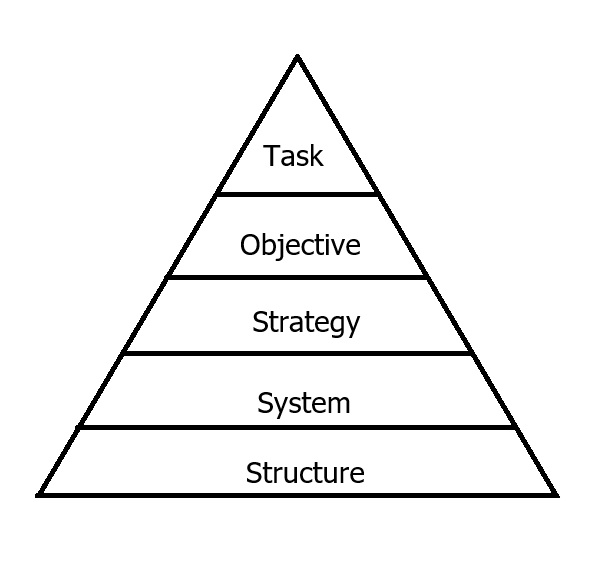
Resilience and capacity

In the end you have to have something that I give to give the disease as a price of recovery.

Not sure where I heard that but it makes sense.

The more fitness, the more muscle you have to give a serious illness, the more likely you are to come out the other side.

Professor Oliver (geriatrics) noted that he could guess someone’s probability of a safe discharge from the quality of their handshake. Firm, strong, reassuring. Weak, flaccid, concerning. A handshake conveys vitality, determination, strength, even psychological state.

Put the work in now so your future self can live to fight another day.

On: Toxic Productivity

Rise and grind.

Hustle harder.

Do this one thing to be 10x more productive.

Entrepreneurs and millionaires do this one thing to be more productive.

This stuff is pushed at us all the time.

The secret trick to getting more done, the subconsious message that we are not being as productive as we could be, that we could do more, get more, have more shiny things.

Why? Why be more productive just for the sake of it? Why push yourself, risk burning the candle too far, neglecting the things that are actually important for the things that we are told are, but are simply marketing mush for someones company.

Step back, slow down, reassess.

Turn the question around. Am I doing enough to be satisfied? Do you need the second job, the productivity hack, the apparent short cut? If you do for financial reasons, then accept that, it sucks, especially if it is out of your control. If you are doing it to keep up with the challenges at where you work, are the pressures on you realistic or are the people above you using you?

Any why are we talking about this at a health clinic? Because that pressure to be “more” can have negative consequences on your mental and physical health. Yes, pushing to complete a specific goal is sometimes worth the expended effort and the recovery time after, but to keep that up endlessly leads to the wheels falling off at some unspecified time in the future, which can make you more of a liability.

Instead, aim for minimal effective dose. The least output required to exceed your needs. This leaves some in the metaphorical tank for situations beyond control, develops stress resilience and still allows you to meet the expectations on you.

Don’t be a liability.

Do that which satisfies you.

Admin and organisation

Most truly successful people have one secret.

A very simple one.

Not a ritual, or protocol or supplement.

Its a practice that they have either had thrust upon them or is inately part of who they are.

Good personal administration.

Making sure the correct item is where it needs to be when its needed. Making sure the correct paperwork has been filed.
Making sure they have kept up their contact network efficiently.
Making sure they have prepared to be on time the majority of the time.
Making sure they have the support network they need.

Some of us are better than others, many achieve fantastic things in spite of thier percieved inability to be “organised”.

More of us are discovering that we are neurodiverse and have been fighting an uphill battle against our own unique pyschology.

That feeling that we are pushing water all the time, while others are gliding smoothly ahead.

They are simply swans. Paddling furiously against the current while looking effortless.

For the rest of us, good admin means finding the correct tool. The unique system that allows you to remember where to be, when, and with what.

Not lots of them, as that adds layers of chaos, but one, or maybe two.

For me, it starts with mind maps and spider diagrams. this allows me to get the noise in my head onto a screen. Ideas are recorded in a notebook. Appointments are on a big wall planner. Family information goes on a white board in the kitchen. It all builds constructively and allows for good communication.

I like the pocket notebooks from Kurzgesagt (https://shop-eu.kurzgesagt.org/collections/pocket-notebooks) as I am a supporter of their channel, but you can find lot of others ways.

What has this to do with fitness, health and being a better human?

Everything.

If you find it challenging to exercise, as there is not enough time, find a tool that helps you choose. If you find meals and nutrition a barrier, look for a way of planning ahead and removing those blocks. If you’re under stress due to constant tardiness, take a few moments to look ahead.

For me, I am always slightly late for things as I remember a hundred other things that need to be done just as I’m heading out, underestimate the time taken to complete that task, constantly believe I can time travel, and can never find the kit and keys i need.

I’m working on it, and so can you.

Good admin can save the world, just a tiny bit.

Distraction

What’s stopping you from making progress?

How do you even know if you are?

Far too many of us turn up to a gym environment, do random things, post about it on a social media channel, and leave again, thinking we are training.

That’s not training bro, that’s messing around.

If you’re mid way through a long cardio session, where you simply have to keep moving for a prescribed time or distance then perhaps letting your mind wander is no bad thing. Especially if it’s getting tough and listening to something else allows you to continue.

But for the rest of us, get your mind out of your phone and into your muscles.

Focusing on your form, the load, the way your muscles are moving has been shown to improve performance significantly, so why throw a free benefit away?

No one on Facebook is going to change your body, only you can. No one on instagram really cares about your latest posed bicep shot.

Stop distracting, start performing.

On: Nature

Take a walk in your head. Out into the countryside. Not the bucolic picture of fields and animals and Sunday afternoon picnics, but the disconnected country. No mobile phone, dark woodlands, no shops or easy takeaways for food and water. Go further. Away from all the signs of humanity. The raw and unfiltered natural world.

Could you thrive there? Could you survive there? The experts will tell you in a temperate environment, you have 3 days without water, three weeks without food although in reality it would almost certainly be faster than that before death caught up and tapped you on the shoulder.

Even people who spend their time in that world, who practice and prepare, would not travel out without caution and care.

Because we are, as humans, pretty rubbish. We are not the apex predator we believe ourselves to be, far too many of us are prey animals with forward facing eyes (apparently the mark of a hunter).

We moved from hunter gathers to agriculture around 12000 years ago. And even before that we worked best in tribes, and carrying tools.

Knowledge weighs nothing, and although you may never need to know how to find and filter water, what plants can be eaten or how to catch and dispatch animals, spending time outside and reconnecting with the real world away from devices and screens, preferably with others is demonstratably good for you in every way. And of course, if you wish to learn those other skills, then find a reputable teacher who can guide you safely. Instagram, as one instructor put it, is not your coach and nature will still win if you fight her.

Even better is to find a tribe to do it with.

Learn to move, to feel earth under your feet and let your eyes settle on a distant horizon.

Your body and brain will thank you.

On: Brevity

If i’m lucky, in my life, i’ll see snowdrops bloom 80 times. If i’m extraordinarily fortunate, i’ll see a hundred.

80 times to watch fragile flowers pop through the cold soil and welcome in a new year.

I’m over half way through that.

And yet I rush forward, always forward, not paying attention to the world around me, except when I need to, not stopping to pause and actually live.

Drawing our focus to now is challenging. There’s always something demanding our attention, another thing requiring energy. However, you only have a finite existence, a given number of trips around the sun, a single pot of energy to draw from. Therefore brevity is necessary.

Why waste it on trivia and noise, distractions and reactions to stimuli you cannot control? Why allow pain defined by others create the motivation for you? Ignore the news cycle, unplug from social media, take control.

Be brief in your interactions if they are not part of your overall goals, and give that extra time to the things that matter to you. Cut your expenses so you can give more to what matters. Cut your inputs to optimise your outputs.

Seek support if there are areas that do require input. A therapist for physical restrictions, a medical professional for clinical concerns, a psychologist for mental wellbeing, a coach for positive input.

From that you can grow, move forward, be better.

Optimise the body, upgrade the mind.